Montserrat tours from Barcelona cover a lot more ground than the postcard photo suggests: a jagged mountain monastery, a statue that half of Catalonia makes a pilgrimage to see, a working winery inside a medieval castle, and hiking trails that most day-trippers never hear about. I have gone through every scraped option behind this site to work out which montserrat tour actually fits which traveler, because the honest answer is that no single tour suits everyone. Some visitors want the cheapest possible half day. Others want a full day with wine and a sit-down lunch. A smaller group wants to hike or ride a horse through the national park instead of standing around the Basilica. This page walks through all of it.
What Is Montserrat and Why Visit?
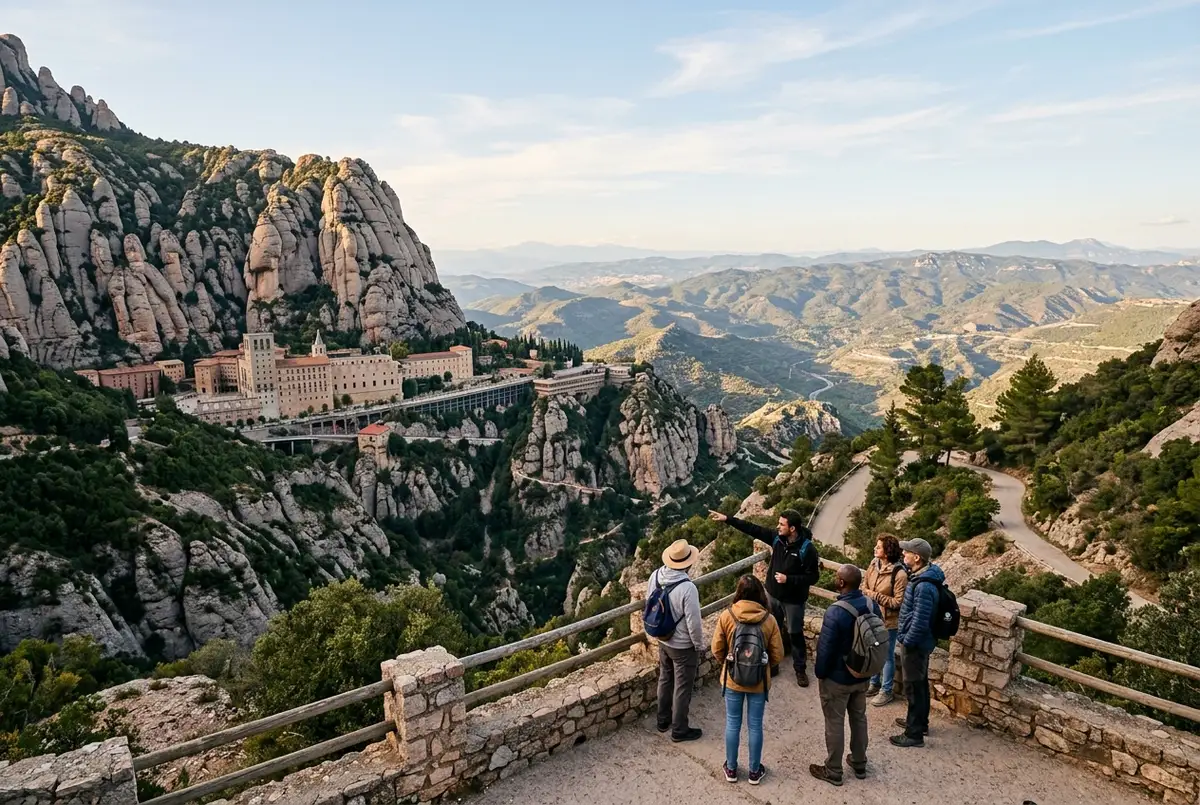
Montserrat is a jagged, multi-peaked mountain about an hour from Barcelona, home to a Benedictine monastery that has drawn pilgrims for nearly a thousand years. The main draw for most visitors is threefold: the mountain scenery itself, a working Basilica you can walk through, and the Black Madonna statue housed inside it. I would call it one of the few day trips from Barcelona that genuinely feels like a different country, not just a different neighborhood.
The monastery, called Santa Maria de Montserrat, sits at roughly 725 meters and is still an active Benedictine community today, not a museum piece kept for tourists. You can read more about its founding and architecture on the Santa Maria de Montserrat Wikipedia entry, which covers the history in more depth than fits here. The official visitor site, Montserrat Visita, is also worth a look before you go if you want the monastery’s own description of what is open on the day you are traveling.
How Do You Get to Montserrat from Barcelona?
Most visitors choose between a guided bus tour, the FGC R5 train plus a cable car or cogwheel train, or self-driving. I would steer first-time visitors toward a guided tour unless you specifically enjoy planning your own transit connections, since it removes the one part of the day that trips people up.
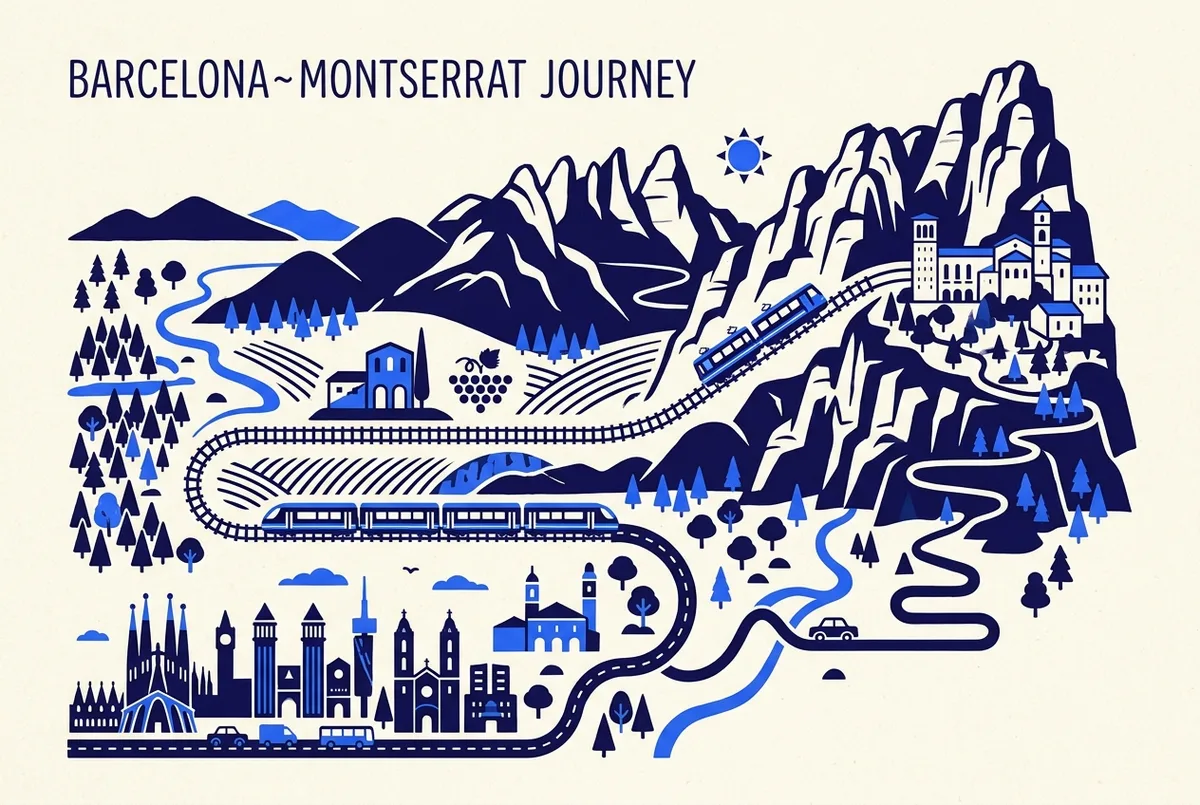
Every guided option on this site starts at the same spot: the Castlexperience office inside Barcelona’s Nord Station, Section B, a short walk from the Arc de Triomf metro stop on line L1. The bus ride out takes about an hour, and the Montserrat massif comes into view well before you arrive. If you would rather handle transport yourself, our getting to Montserrat guide breaks down the R5 train, the cable car versus cogwheel train choice, and the realities of driving and parking at the monastery. My honest take: driving yourself only makes sense if you are already renting a car for other reasons, since parking at Montserrat on a weekend can fill before midday.
What Types of Montserrat Tours and Tickets Are There?
There are really three layers here: basic entry, a guided bus tour with options you add at checkout, and a self-guided combined ticket. Our Montserrat tickets pillar walks through all three in detail, but the short version is that the guided tours in the table below are built around a flexible base price that you then upgrade.
The flagship tour starts at €39 for a half-day bus trip, with the cogwheel train, Black Madonna entry and a full-day winery extension all sold as separate options. I would read the option name carefully at checkout rather than assuming the cheapest one includes everything, because it almost never does. At the other end, the Tot Montserrat combined ticket skips the guide entirely and bundles transport, the train or cable car, and museum entry into one self-guided pass, which suits travelers who would rather move at their own pace than stick with a group.
Across the full lineup, prices climb roughly in line with what gets added: the base monastery tour at €39, the gourmet lunch version in the mid-€60s, the self-guided combined ticket in the low €70s, the wine and hiking tours mostly in the €74 to €98 range, and the multi-destination Girona and Costa Brava trips as the most expensive tier, since they cover far more ground in a single day. I would use that ladder as a rough filter: if your budget caps out around €50, the base monastery tour is your option, and if you are willing to spend closer to €90, you have your pick of wine, hiking or the Girona combination instead.
Half-Day or Full-Day: Which Should You Book?
A half-day tour covers the monastery, the Basilica and free time at the summit in 5 to 6 hours. A full day adds the cogwheel train and a winery stop, stretching the day to 6 to 9 hours. If this is your only full day in Barcelona and you want the afternoon free for the city, I would book the half-day option without hesitation.
If wine matters to you, book the full-day extension from the start rather than trying to add it later, since the winery stop at Oller del Mas, a working castle winery run by the same family for 36 generations, is one of the more memorable parts of the longer day. Stack every option together, cogwheel train, Black Madonna entry and the winery lunch, and the price climbs toward €90, which is the point where I would start comparing against the dedicated Montserrat wine and gourmet lunch tour instead, since it builds the meal into the base price rather than tacking it on.
Are the Montserrat Wine Tours Worth It?
If you enjoy wine and want a sit-down meal with a mountain view, yes. Our Montserrat wine tours pillar compares the options in full, but the short version is that they split mainly by meal style and region. One pairs the monastery with a tapas brunch, another with a full sit-down gourmet lunch, and a third travels further out to the Penedes region for cava specifically rather than a winery near the mountain itself.
Of the three, I would pick the tapas brunch if you want a shorter, livelier stop, and the sit-down lunch if you would rather sit down for an hour and actually relax. The Penedes cava tour runs closer to 10 hours total, so I would only book it if cava itself, not Montserrat, is the real reason for your day.
Can You Hike or Ride a Horse at Montserrat?
Yes, and this is the part most first-time visitors skip entirely. A cable car plus easy guided hike option covers scenic trails around the massif in about 6 hours, while a separate horseback riding tour rides through the surrounding national park in roughly 6.5 hours. Our Montserrat hiking pillar covers trail difficulty and what to expect from both.
If you are deciding between the two, I would book the cable car and hike for a first visit, since it keeps the monastery itself in the itinerary alongside the trail. I would save horseback riding for a return trip or for travelers who specifically want a different way to see the national park, since it trades some monastery time for the ride itself.
Who Is the Black Madonna of Montserrat?
La Moreneta, the Black Madonna, is a wooden statue of the Virgin Mary with a dark patina that gives her her name, and she is Catalonia’s patron. Our Black Madonna of Montserrat pillar covers her history, the legend tied to her discovery, and why she draws pilgrims from across the region, cited to the same Wikipedia entry linked above for the fuller history.
Seeing her up close is usually an add-on, not something bundled into the base tour price. If seeing her matters to you, and for a lot of visitors it is the entire reason for the trip, I would book that option directly rather than hope for a free slot during your time at the summit, since the queue can run long on weekends and the Basilica occasionally closes without much notice during religious celebrations.
Is Montserrat Worth a Day Trip from Barcelona?
For most travelers, yes, especially if you treat it as a half-day commitment rather than a full day you have to protect from other plans. Our is Montserrat worth visiting pillar gives a fuller honest verdict, but my short answer is that the mountain scenery alone justifies the trip even before you factor in the monastery or the Black Madonna.
Where I would hesitate: if you only have one full day in Barcelona and you are not drawn to monasteries, mountains or wine, I would spend that day in the city instead and save Montserrat for a return visit. It is a strong trip, not a mandatory one.
When Is the Best Time to Visit?
Early in the day, on a weekday if your schedule allows it. Montserrat sits considerably higher than Barcelona, so I would pack a light layer regardless of season, since the temperature difference is real even in summer. Weekends and religious holidays bring the heaviest crowds, both on the mountain and in the queue to see the Black Madonna, so a weekday morning slot is the version of this trip with the shortest lines.
Spring and autumn give the most comfortable walking weather for the outdoor sections, the market stalls and any hiking add-on, while midsummer days can run warm by midday even at altitude. Winter visits are quieter and the mountain scenery can look dramatic under cloud cover, though I would check the forecast before booking a hiking or horseback option in that season, since conditions on the trails change faster up there than they do in the city below.
What to Expect on the Day
Expect a guide-led walking tour of the monastery grounds and the Basilica’s architecture, roughly 1 to 2 hours of free time to browse the market stalls or walk to a viewpoint, and, depending on your option, a ride on the cogwheel train and a stop at a winery. Groups typically split into smaller clusters of up to 20 once you reach Montserrat, even though the bus up is shared with the full coach.
The Montserrat Museum, which holds pieces attributed to Picasso, Dali and El Greco, is rarely included in the base tour price. I would only add it if you already have a genuine interest in those collections, since it is inexpensive to buy on the spot and easy to skip if your free time is tight.
One thing worth knowing before you pick a tour: the flagship monastery tour has been reviewed by several thousand travelers, which is a large enough sample that its rating reflects a consistently run itinerary rather than a handful of enthusiastic write-ups. The wine and hiking tours have smaller but still substantial review counts behind them. I would treat a tour with only a few dozen reviews a little more cautiously than one with thousands, simply because there is less of a track record to judge it by, even if the rating itself looks strong.
Who Should Book a Montserrat Tour?
Budget-conscious travelers who still want a guided experience are the best fit for the base half-day tours. Wine lovers and anyone who wants a relaxed afternoon should look at the full-day and wine-focused options. Active travelers who want more than a walking tour should look at the hiking or horseback riding options instead of a standard sightseeing bus.
It is a weaker fit for travelers with reduced mobility on most of these tours, since the terrain around the monastery includes stairs and uneven stone, and operators generally ask that you contact them directly rather than assume the standard route will work. Families with very young children can usually join, since infants aged 3 and under typically ride free, though I would still bring your own car seat if one is needed, since operators rarely provide one.
Solo travelers fit easily into the half-day and full-day group tours, since you join a shared bus and a guided group regardless of party size, with smaller clusters of around 20 people once you reach the monastery itself. Larger families and groups of friends work just as well on the standard bus tours, while anyone who specifically wants a smaller, more flexible day is better served by the self-guided Tot Montserrat ticket than by any of the fixed-schedule bus options. Our Montserrat tickets pillar covers that trade-off in more depth.
My Insider Tips for a Smooth Visit
Arrive at the meeting point with a few minutes to spare, since the bus waits for no one and the check-in office can be busy with several tour groups at once. If you want the cogwheel train, confirm the option name before paying rather than assuming it is included. If the Black Madonna is a priority, book that option specifically instead of relying on free time. And if you are torn between a self-guided pace and a guide, I would default to the guide for a first visit, since the monastery’s history lands better with context than it does reading a plaque.
For travelers on a tight budget, I would book the cheapest half-day option and skip every add-on, since the monastery, the Basilica and the free time at the summit are the core experience regardless of price tier.
If you are heading straight to or from the airport, I would store any luggage in Barcelona before you reach the meeting point rather than bring it along, since you will be walking and climbing stairs around the monastery grounds all day. Our getting to Montserrat pillar covers the practical logistics for that. I would also build in some buffer after your return bus before any flight or train connection, since a mountain day trip is not the one to cut close on timing.
Can You Combine Montserrat with Girona and Costa Brava?
Yes, and it is a genuinely different kind of day. Our Montserrat and Girona day trip pillar compares a one-day combination that links the monastery with Girona’s old town and the Costa Brava coastline against a two-day version for travelers who would rather not rush all three stops into a single day.
I would pick the one-day combo over the two-day version unless you specifically want unhurried time on the coast, since the one-day option already covers an impressive amount of ground in around 11.5 hours. For a slower trip, the two-day version removes the rush, though it is a meaningfully bigger investment of both time and budget. Either way, this combination suits travelers who have already done a standalone Barcelona city trip and want Catalonia’s other landscapes in one go, rather than first-timers who should probably keep Montserrat and the city separate.
Whichever option you land on, the comparison table below pulls together all 10 of these tours side by side, with real prices, durations and what each one includes, so you can see the full lineup before you commit. For a broader sense of Catalonia’s tourism offerings beyond Montserrat itself, the Catalan Tourist Board is a useful starting point.


